Monday, April 11, 2016

My Religion


My Religion

‘Religion’ [inverted commas]

Religion is a term that can refer to many different things including belief, philosophies, culture and community. Here I am going to talk about ‘religion’ in terms of a personal belief that exists in all people (including both those who do and do not believe they encounter a spiritual realm) which gives us a framework to function. Religion as I will refer to it is the driving force behind the christian, muslim, jew, atheist, agnostic, etc. Religion is not the monopoly of those who call themselves ‘religious’ but the meaning that each of us find. It is the truth that points us to a capital ‘T’ Truth.

Loss of innocence

My basis in religion stems from growing up in a baptist church with my immediate family members involved in churches of various denominations. There are some critical points in my lived experience which caused me to deconstruct what I once knew to be infallible truth, and have in turn pointed me to what I understand to be Truth.

Hell

Hell for me was a place where people who hadn’t committed their lives to Jesus ended up. I was never really sure whether it was fire and brimstone, or simply a separation from God. But I was taught that it is the place my friends end up if I don’t convert them. When someone who mentored me in the social justice space hung himself, I tried to synthesise my belief with a new lived reality. My friend wrote on his note ‘if there is a God, I hope he forgives me.’


I only have my lived experience to back this up. I know that a God who deeply loves humanity and could even deeply love me would not be a God who would throw my friend into the depths of hell for eternity for not towing the party line. Like Rob Bell, I began asking ‘does God get what God wants?’, and believing in the God who wants relationship and restoration, I could only answer yes.


So from that perspective, I don’t actually care whether Hell exists in another realm. It could, but nothing in my world would fall apart if it didn’t. What I do know is that hell exists on earth now - in Australia’s detention centres, in occupied Palestine, and for people trapped in situations of domestic violence.

Depravity

Though I may have struggled to admit this, depravity was the lens through which I saw the world. I believed that humans at their very core were broken not bent. The only way to resolve this brokenness was to wrap it up with orthodoxy (right belief), and then fix other people’s brokenness through orthopraxy (right practice). I had to remind myself and others of our shared depravity, and that I had the magical cure to offer them.


It was a radical change for me to come to the understanding that at our very core, at our deepest level, we are the image of God. We have within us the Truth that we are seeking. It’s the Truth which other truths guide us towards. Rather than adding doctrine, theology and religious practices into our lives, we must strip back the lies, hurt and pain which stand in the way of us becoming at one with our very essence. Only then can we delve into and derive energy from the image of God inside us.


This has lead me to believe that good can exist where I was told God was not. There is the capacity within every living human to contribute to a wider vision of what could be. There is nothing I can do to remove the image of God and truth within me from myself or from another human.

Reconstruction

It’s much easier to deconstruct than to reconstruct. For many of us, our lived experience propels us into deconstructing the systematic religion we once believed. A life without reconstructed religion or philosophy is appealing. It presents itself as freedom gives the illusion that happiness is attainable.


Perhaps more problematically, such a deconstructed understanding tends to hold up happiness as the central virtue. Yet it cannot derive meaning or purpose in suffering, and it doesn’t have the foresight to sacrifice for the ‘other’. The identity of the deconstructed self is entirely fluid, unreliable, and is unable to hold to principal through trials in order to better understand itself. The deconstructed self can only exist in the immediacy and no one should dare to predict where it may be tomorrow.


While at our very core we have only the capacity to love and to do good, surrounded by this is are our capacities to be selfish, to hate, and to destroy. I believe we can be active in engaging the deepest level of ourselves and others and in doing so bring about a kind of ‘heaven’ on earth and to some degree, within our own lived experience. This could have many facets, but for me includes:

  1. A commitment to a specific community to draw energy from
  2. Seeing the outsider as sacred and inviting them in (the greatest example I perceive of this 'enemy love' is the Crucifixion of Jesus and the way he responded to a violent system)
  3. An openness to learn and adopt the truths of others which point to Truth.
  4. Understanding heaven and hell are lived realities for many people
  5. Pursuing a world which releases people from manmade ‘hells on earth’ and enables heaven to take root among us.

Sunday, November 16, 2014

5 Things I've Learnt from Stephen Christian (Anberlin)


1. There is beauty in the small things

As kids we're encouraged to dream big. As adults, we often feel like we have failed these dreams.

When I was volunteering with World Vision Australia I was privileged to interview Stephen with a group of young activists. One things which is frozen in my mind is how Stephen seemed to come alive when surrounded by a small group of activists. I know he is charismatic, but he is also used to performing in front of large groups of people. Yet something lit up in him when he told us that we as a small group of people who cared about poverty and human trafficking will be the ones who change the world.


Life is a constant revaluation of our own path. Many who are who we want to be are not happy and want what we have. We don't have to be famous to live the good life or change the world, we have to be committed.

2. There is a time and a place

I think for the members of Anberlin, perhaps the easiest thing for them to do would have been to stay together. It was life as they knew it. I have great respect for Stephen and the other members as they are still choosing to follow their dreams when many of their fans think they are already living it.

I distinctly remember Stephen saying to me that his dreams are bigger than Anberlin. Although he plays internationally sold out shows, he will be called to do bigger smaller things. Sometimes we try to qualify what we do by the quantity of people that see it. But there are so many macro-ideological yet micro-relational things we are each called to


3. There is grace in honesty

Many Anberlin and Anchor & Braille songs deal with pain and suffering. I must admit, when I first heard them I brushed them off as an emo band. Song titles like 'There Is No Mathematics To Love And Loss' is a bit of a dead giveaway. In fact I refused to like Anberlin until a band member made us perform Unwinding Cable Car. I then realised music can be emotionally honest while still being profoundly interesting.

4. There is honesty in grace

Grace doesn't always mean being nice. In the face of violence and suffering Christian sings 'we owe this to ourselves, we can't just let this go'. 

I have also realised that Stephen believes it is important for leaders to not hide away their shadow self. In a recent interview Stephen was actually grateful to be able to reveal publicly the things he struggles with. In an age where our idolised leaders are caught up in a web of lies and scandals, taking the initiative of stepping down from the pedestal is unusual yet admirable. It means coming to terms with the gap between the 'is' and the 'ought', but it also separates us from the captivation of denial.


5. Practice, don't preach

It's often tempting to push our world view and morality on others. Rather than telling people how to act in his lyrics, Stephen considers both the suffering and hope we can bring about through our actions. I think a reflective rather than prescriptive communication of one's world view is a much more powerful yet less violent way of coming to a better conclusion.

Here is my 2009 Interview with Stephen Christian from Anberlin and Anchor & Braille.

Saturday, August 9, 2014

'Generosity Cap' : stepping towards a refugee solution

I have been involved in refugee advocacy for over three years. I have said a lot about what is morally wrong with how the state of Australia treats asylum seekers, and how the nation of Australia views them. I have also discovered that many on ‘my side’ of the fence, as it were, are somewhat more reluctant in putting forward a tenable ‘solution’, or at least a step in what we may believe is the right direction.

This is understandable as there are many contradictory ideological perspectives that can group together to attack how the state and nation view those seeking asylum. It is far easier to bond together on what we are against, rather than what we stand for. The reality is that those who are against the current treatment of asylum seekers do not all stand for the same thing, so we have grouped together around what unifies us.

Saul Alinsky says that ‘the price of a successful attack is a constructive alternative.' Many of us are terrified of the word ‘solution’, because its heritage in Australian political discourse makes it seem synonymous with ‘deterrence’ rather than something that actually addresses the reasons as to why people are seeking our protection.

So here is my first try at a ‘solution’. I think this is humane, realistic, and a step in the right direction.

Refugee Camp: Sven Torfinn for the Guardian


'Generosity Cap' : a refugee solution


7.5% of Australia’s gross population increase should be reserved for protection visas with a minimum of 30,000 to be granted each year. Currently Australia’s population is increasing by approximately 400,000 people each year. 30,000 is a reasonable figure - we need the numbers regardless.

An additional 10,000 places should be made available for permanent protection reunion visas, where a refugee in Australia can sponsor a family member when they have the means to independently support those who they are being reunited with.

It’s difficult to come up with a number like 30,000 or 7.5%. One way of looking at it is to first consider that Australia has about a 1% share of global wealth.  There are just over 50,000,000 refugees in the world. This means that Australia’s fair share is around 500,000. It is difficult to assess over how many years the 50 million refugees have been ‘produced’. The UNHCR reports that there were 10 million new refugees last year along. It would take us about 17 years to become host to over 500,000 first generation refugees or 13 years if we are to include reunion visas. 

It is worth noting that resettlement is not always the best option. Many refugees are looking for peace, not resettlement. It would seem that the 5 million Palestinian refugees are not all desiring resettlement in Australia. But for many of the 50 million refugees in the world, resettlement is their only option.

This intake can only be increased by individuals or communities committing to hosting an asylum seeker, or asylum seeker families for periods of at least 3 years. Those who are hosted for three years by members of the public will not count towards the 30,000 cap. This is a fair compromise between collective responsibility towards those in need and individual. This is a ‘cap’ that is determined by the generosity of Australian citizens.

Maximum 10,000 refugees can be resettled through arriving by boat or claiming protection once in Australian territory. Only those who are found to be genuine will be resettled. Once the 10,000 cap is reached, asylum seekers will be forced to relocate either back to their home country or to a regional refugee camp which is co-sponsored by the Australian government unless Australian individuals and communities are willing to commit to hosting them.

Those who arrive by boat and are found to not be genuine should have the right to appeal. If they are unsuccessful or choose not to appeal, they should be sent back to their home country where possible. In the rare cases that they are unable to be sent back, they should be given temporary residency in Australia.

The Australian government should once a year check on the status of those who have been sent back through a trusted humanitarian organisation over the course of five years. If it is found that forced deportations have resulted in those who were thought to have not been refugees being persecuted then this policy must be reconsidered.

At least 20,000 refugees from camps, primarily in the Asia-Pacific region should be resettled in Australia each year. This should lower the number of boat arrivals and drownings at sea. There should be incentives for employers to hire refugees so that they can become ‘economic contributors’ as soon as possible (acknowledging that various studies have shown that refugees are currently contributing greatly towards Australia’s economy).

The Australian government should invest in online infrastructure to make it simple for members of the public to be able to host refugee families during their initial resettlement in Australia.

What are your thoughts?

Saturday, January 18, 2014

Confessions of an (almost) pacifist


Polarisation

It's the name of the game. People tend to like to pigeon-hole others, and by implication - themselves, as far away from those with opposing views as possible. It forces each one of us into thinking in black and white. Shades are a compromise.

But even those who believe that shades hold truth, often believe it with the same force as those who hold fast to a black and white mindset. Any views, whether open on closed, progressive or conservative, left or right, which need to pigeon-hole others as a counterpoint for validation purposes are essentially black and white.

And yet black and white is incredibly attractive to us humans. We believe we have each eaten the fruit from the tree of the knowledge of good and evil which convinces us that we are righteous judges. Perhaps more so, it convinces us that we are right judges. We have each been to the mountaintop and are so confident in our beliefs that we would commit murder to see them practised among the others.

Confessions of an (almost) pacifist

They came to the village with their weapons. Home by home, they raided. Life by life they ended. In order to do no harm, the villagers stood by watching their wives and children being raped and tortured.

I have a certain admiration for those in our military and police force. To the extent that they are willing to, or in many cases have already taken the courageous step of sacrificing their lives for others, they are the most noble among men. I often doubt whether I or many others would be willing to make the sacrifice they make - at times for their mates, at other times during humanitarian missions. To blindly criticise the army and police-force and what they have committed their lives to without any thought for their vision, hope, and aspiration reflects either blatant hypocrisy or one's own inflated ego.

Could I, as an advocate for demilitarisation and non-violent responses to conflict condemn those that are willing to risk their own lives to save the villagers in the italicised example above? I would suggest that I would have no right to condemn such people for their actions. I have not been in a war zone, I do not know what it is like to stand by while those I love are either being tortured, raped, or killed. What gives me the right to condemn those who are willing to risk their life and liberty for their families? Sometimes I want to blindly condemn such people - because deep down I still want the world to be black, white, and nothing else.

A third way

I believe that it is not inconsistent to admire those who sacrifice themselves for others and yet believe that there may be a third way that involves neither passivity or aggression as tools for overcoming evil.

Love inevitably overcomes evil. I believe that our nature is good and that goodness comes more naturally to us than evil. I believe that no individual created by a loving God is irredeemable. I believe that God still has good work planned for warlords and juntas; presidents and paedophiles. These fundamental ideas give me no other option than to believe that killing even the most evil of men is denying them the option of doing the good and loving works that God (still) has planned for them.

We could argue 'till the cows come home as to whether humans are in fact naturally good and whether all humans are created to respond and be transformed by simple acts of love. We will never get there in a debate. This is where I have to admit that my belief in non-violence which leads me to being an (almost) pacifist is not fundamentally based on rationality but my understanding of human nature, creation, and God.

And while some argue (rather convincingly in my opinion) that non-violence is the most effective means of overcoming evil in real world conflicts, I admit that I am not basing my beliefs on this empirical evidence. I believe that love wins. This is the hope that keeps me alive. 

Perhaps I am wrong

How will I answer if I have got this all wrong. Perhaps I have let innocent people die because of a faith-based axiom which perhaps could be, but is not in my mind, based upon strict and impartial logic. I believe this is a real possibility. If I am deluded and wrong, I can only ask for forgiveness.

None of us should believe that we are beyond reproach. Whatever the answers may be, a good starting place is to desire the good of others no matter who they may are. In seeking the good of others, friend or foe, we move towards an idea of 'good' for the commons and away from relentless polarisation and shouting matches.

Nevertheless

If good does win at the end of the day, and if even the most wretched of us can be transformed through love, then there will never be enough time to practice this understanding and share it with the world. If the same God created Muslim and Jew, Christian and Atheist, then we must invest ourselves into building bridges rather than walls. If God is in fact good, and desires good for us, we have no enemy to kill and no need to be validated through polarising others.


Saturday, November 16, 2013

Let's face it: We're probably racist.


Let’s face it. 

If New Zealand was under attack and boatloads of predominately white people from New Zealand came to Australia, our ‘stop the boats’ policy would change instantly. They wouldn't be sent to Nauru, Manus Island, or anywhere else with the promise of never being resettled. They wouldn't be perceived as a threat; as selfish individuals who have come to our country as economic opportunists. We wouldn't seek to deter ifrom asking for our help.

They would be welcomed.

If they were ten, twenty, or thirty percent of our net migration in a given year, we would not flinch. We would welcome support from governments, churches, and charities whether it be in solidarity or in substance. Our preachers would not preach hate. Our teachers would teach us to hear their stories. 

Our lives would be mutually enriched.

If they came to our country we would give them the right to work. We would allow them to have a dignified existence in our midst, and seek to know them in a deeper way than as ‘the other’. Ungracious metaphors would have no place in our language. They are not a flood, a drain, or a wave. They are people. They are real people. They have names. They have stories. They have suffered.

They would be heard. 

If they came to our country they would not see signs saying ‘go away, we’re full’, or ‘don’t like it? get out’. They would be encouraged to express their culture, to teach their histories, to share their food. They would not be looked upon suspiciously. There would be no neighbourhood alarm to ring when one of them steps foot on to a particular piece of land.

We would choose to embrace them.

Why would our reaction be different if they were from a predominantly white country? 

Because we are racist.

People who believe the spin that says ‘they’ have malintent and are out to get us are racist. People who think that asylum seekers fleeing persecution are somehow gaming the system are racist. People who think that suffering and vulnerable people who need our help should be shown the door are racist.

Let’s not use colourful ‘diplomatic’ language and call them ‘rationalists’, ‘conservatives’, or ‘patriots’. It’s time we called a spade a spade, a person a person, and a racist a racist.

Sunday, September 22, 2013

Not so Super

One of the joys of attempting to navigate towards the Kingdom in the unKingdom/non-Kingdom kingdom of our world is working out the least worse decision when there is no clear singular moral option. I think this is the case for superannuation. Money can be a very bad thing - we know what it does to us yet we still submit to it. However, I think superannuation is nearly unavoidable. So if you have super or are considering investing in a super fund then keep reading.

There are a plethora of ethical and topical considerations which cannot be ignored when it comes to where we invest our money. This is why I recently emailed REST who I currently invest with to find out more about their ethics. This was my email:

'I am a member of Rest Industry Super. I am hoping that you can clarify the following points for me as to my investment with Rest.

  1. Does Rest invest in companies who manufacture weapons?
  2. How does Rest ensure that my investments cause no harm to the environment?
  3. Does Rest adhere to a transparency code?
  4. Does Rest adhere to a charter of ethics?
  5. Does Rest invest in gambling, alcohol, tobacco, or any other industries that are commonly considered to be unethical?'
I sometimes agitate by asking too many questions, but I didn't really consider the above questions unreasonable. This was the response I received:
'Sustainability is one of many important investment considerations our investment managers seek to take into account. We don’t classify underlying investments we hold as you require and we do not restrict investment on any singular consideration. We invest in a range of assets such as shares, bonds, property and infrastructure.'
I found the above response completely inadequate from a customer service perspective and from an ethical perspective. To not restrict investments according to particular 'singular' considerations means that anything is up for grabs... weapons, gambling, porn - you name it!

Australian Superannuation had been suggested to me as the default option for people working in the NGO (NFP) sector. Unfortunately they have removed their restrictions on unethical investments in 2010.

I also had a look at Crescent Wealth, Australian Ethical Super, Cruelty Free Super, and Christian Super. My criteria was that my fund of choice must have a clear stance on various ethical issues, most importantly, weapons manufacturing. They also must have a good standing with SuperRatings.

The list is as follows, from good to bad:
  1. Christian Super - for it's clearly defined stance on topical issues and great ratings
  2. Australian Ethical Super - for it's somewhat defined stance on topical issues and good ratings
  3. Crescent Wealth - for it's clearly defined stance on topical issues, good treatment of animals (generally), clear stance on weapons
  4. Australian Super - Good ratings/awards
  5. REST - ....?
To clarify - Christian super is not first because I identify with the term Christian. That would be like taking a how-to-vote card from the Christian Democrats. Christian Super seem to have the clearest stance on the issues which I feel strongly about (not sure what they are? read the rest of my blog!).

Thoughts?

Monday, March 11, 2013

The Kingdom of God


Christ compels us to see God's image in the people whom our society tells us are evil. Moreover, by his example we are called to reject the systems, hierarchies, and religion which depend upon the diminished worth of some to feed the privileges (and stomachs) of others. When we begin to see God's image in all of God's children there ceases to be room for the kinds of exclusionary practices which have haunted our world. 

In the new kingdom, false gods such as racism, militarism, poverty, sexism, homophobia, and others are not required for the Glory of the King. They often are required for the maintenance of our current systems, hierarchies, and religion. Our Kings and Queens, Prime Ministers and Presidents, CEOs and CFOs can only exist in their positions because we believe that some people are capable of determining what is good and right for others, while another, often much larger group of people are incapable of looking after their own affairs. 

We can only acknowledge one lawmaker, and therefore, we can only acknowledge one set of laws. If His law and other 'laws', practices, and beliefs are not in harmony with one another, we are presented with the perfect opportunity to be one with whom our obedience must lie.

I have been born into a world of golden idols whom our Pharisees lead us to worship. For how long will we follow their laws as a derivative of our patriotism, their economic injustices masked by our reliance upon capitalism, and their prejudices based on our worship of false Gods? 

Repent, for the Kingdom of God is at hand.

Tuesday, January 1, 2013

Sabbatical Sundays


This is an idea that I've been thinking about for a few months now. I thought I would write something up about it before I start a public Facebook page for discussion and accountability purposes. Let me know what you think!

Work, Buy, Consume, Die


Sabbatical Sundays

Imagine it’s nine in the morning on Boxing Day. The consumer capitals of our major cities are preparing for the rush of shoppers seeking a bargain. Blurry-eyed retail staff, still recovering from the lead-up to Christmas awaken early. Some of them cancelled plans to attend Christmas dinner with their families the night before knowing that the security of their employment depended upon their availability during the ‘Christmas black-out period’.

But this year, when the shops open from eight in the morning, something is different. You’re nowhere to be found. Not just you, but several of your friends who once flocked to the sales and battled for car parks have made a conscious decision. This year you decide to put yourself in the shoes of the retail staff. You decide that time spent with family and friends is more sacred than your shopping. This year, your shopping can wait.

Sabbatical Sundays is the meeting place for a movement of people who are concerned about how 24/7 trade effects things more important than consumables. This is a movement of people who understand that the conditions of employment for many workers in service-related industries are not what they would choose if they had greater influence over their terms of employment. These are not the conditions we would choose if we were employed in service-related industries.

There are several reasons why one may want to consider the effects of demanding 24/7 labour. It might be because you are concerned with the effects that this kind of trade has on the people working in the industry. It might be because you are concerned with the ever-increasing power of multi-national corporations and how 24/7 trade makes it more difficult for small-scale businesses to break into the market. It may be because you believe that time spent with family is more important than corporate profits. It might be because you believe that 24/7 trade is incompatible with your religious or family values. There are many reasons why you may want to consider what labour you demand and when you demand it – this is a place where people with different drivers can come together under the same idea.

While a sabbath or sabbatical, considered to be a time of rest or worship, could be observed for any stretch of time on any given day, month, or year, this idea specifically related to Sunday labour. If there is one day of the week that could be won back, one day of the week that some consider holy, or one day of the week that families and communities gather together to appreciate what is really important about our existence, that day is Sunday.

This movement, however, also believes that 24 hour trade is not a necessity and that to drop into a fast-food joint at two in the morning demands a kind of labour that no one should be asked to provide. This kind of out-of-hours luxury labour is drastically different to requiring emergency services. It is inevitable that people working in the emergency services sector will be required to work unusual hours. The same cannot be said for fast-food and retail outlets. For their services, we can wait until morning.  

From these thoughts has sprung the idea and movement that has long existed yet feels buried: Sabbatical Sundays.

Tuesday, November 6, 2012

Video: BAE Systems Australia: at the forefront of war

My last post regarding the work of BAE Systems Inc. and BAE Systems Australia has attracted an enormous amount of views, making it my second most viewed post ever. It's great to know that people are paying attention to the militarisation of our world.

Check out this video made by some peace activists in Melbourne to get a better idea of what we are trying to communicate to BAE Systems Australia. Let them know what you think here.


Wednesday, October 24, 2012

BAE Systems: Censoring the voices of the people

The site of the latest BAE Systems protest - with many more to come


Why is it that a company like BAE Systems would not want a couple of Gandhi & Martin Luther King, Jr. quotes pasted around their Facebook page?

Why is it that a company like BAE Systems would censor any views which they disagree with, no matter how politely they are put? 

Why is it that a company like BAE Systems who claims to be fighting the 'war on terror' would, in the most undemocratic fashion, silence the voices of the people?

Maybe it's because BAE Systems are one of the largest, if not the largest arms producer in the world. They sell weapons to over 100 countries including Israel. They are a threat to national security. They are a threat to human security. They are a waste of, what essentially is tax payer's money.

You don't need to do much research to find out about the instances of bribery and corruption within their ranks. BAE Systems have been caught breaching arms control regulations which aim to prevent weapons falling into the wrong hands.

Don't let BAE Systems fool you. They are not a civilian transport organisation. They are primarily involved in the arms trade. 

They're not on a particular side of global conflicts. They are on every side of global conflicts. 

They are in it for the money. If the wars stop, their profits go down. It's in their interest for people to keep blowing each other up.

I plan on posting more about BAE Systems. Fortunately here they cannot censor what I say, although I'm sure they will try. I hope to have a video from a recent protest outside their offices in Melbourne posted shortly.

Maybe it is time for us to stand up against this organisation. Post your city below - there is probably a BAE Systems office near you. Organise a protest, a blockade, a letter handout. Do something. Change the world.

Friday, October 12, 2012

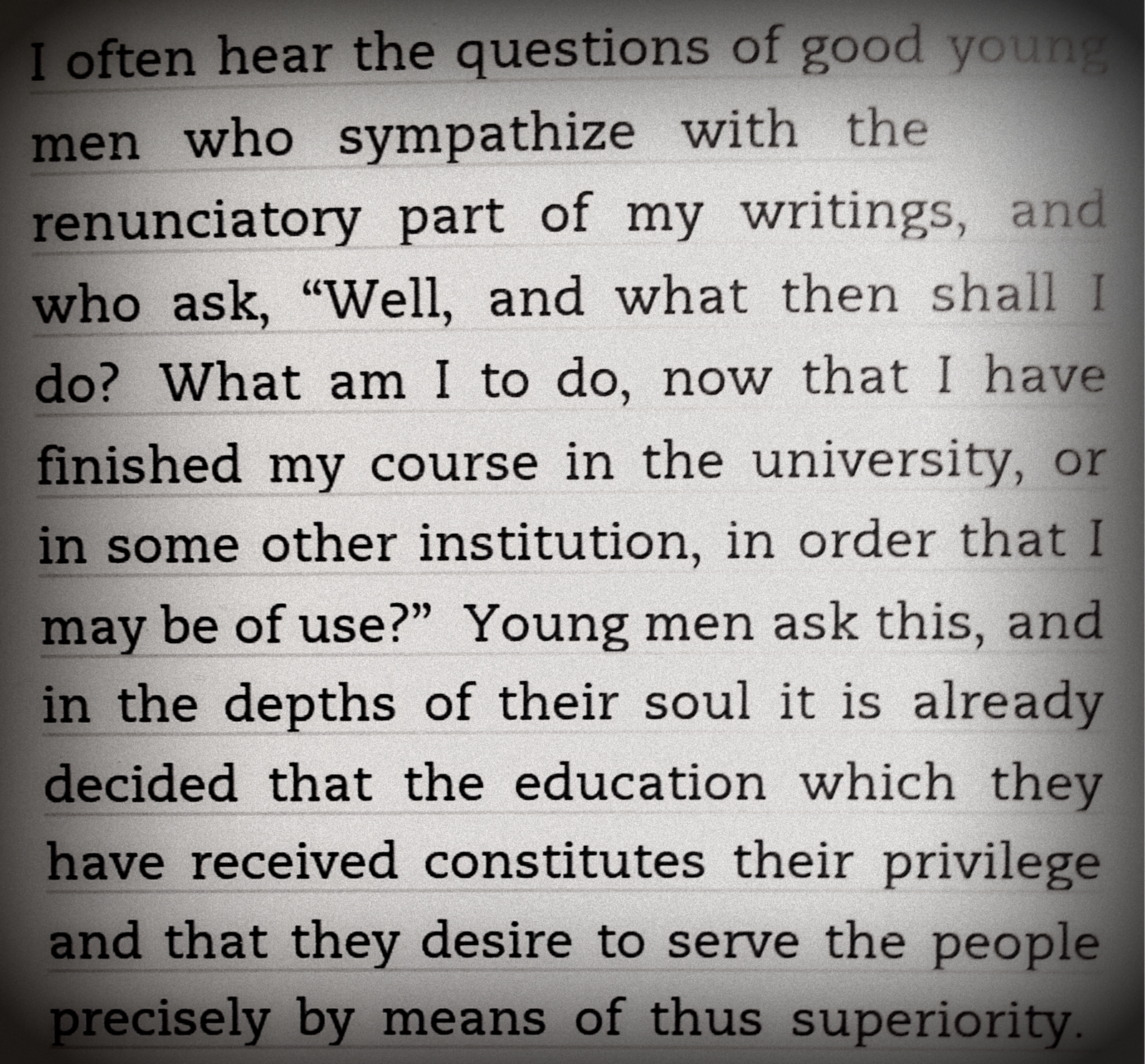
Leo Tolstoy: What To Do?

I thought I would upload some photographed quotes from Tolstoy's 'What To Do?' which is an incredibly challenging book. I recently finished reading it, and it has massively affected my outlook on the meaning and causes of poverty. I hope you enjoy!

Also, please post your thoughts.


Monday, October 8, 2012

The uninvited neighbour: A Christian response to modern refugee issues

I would like to thank Jessie Taylor & Gordon Preece for helping me to think about this issue in a clearer manner.

Refugees on Nauru during the 'Pacific Solution' era


Biblical teaching suggests that Christians have a special duty to love those who are foreigners and refugees (Deuteronomy 10:19). How should this teaching be understood and applied by Christian citizens in Australia's current political context?  


Introduction

This article seeks to examine if and to what extent the normative elements of the Christian texts are relevant to the context of the current debate surrounding uninvited asylum seekers in Australia. I begin by providing a brief outline of the current political situation. Then, I explore the relationship between the biblical narrative, Christian principles of justice, and the politics of asylum. Finally I will consider the normative implications of applying Christian principles of justice within the Australian political context and what issues this may raise.

The Australian context

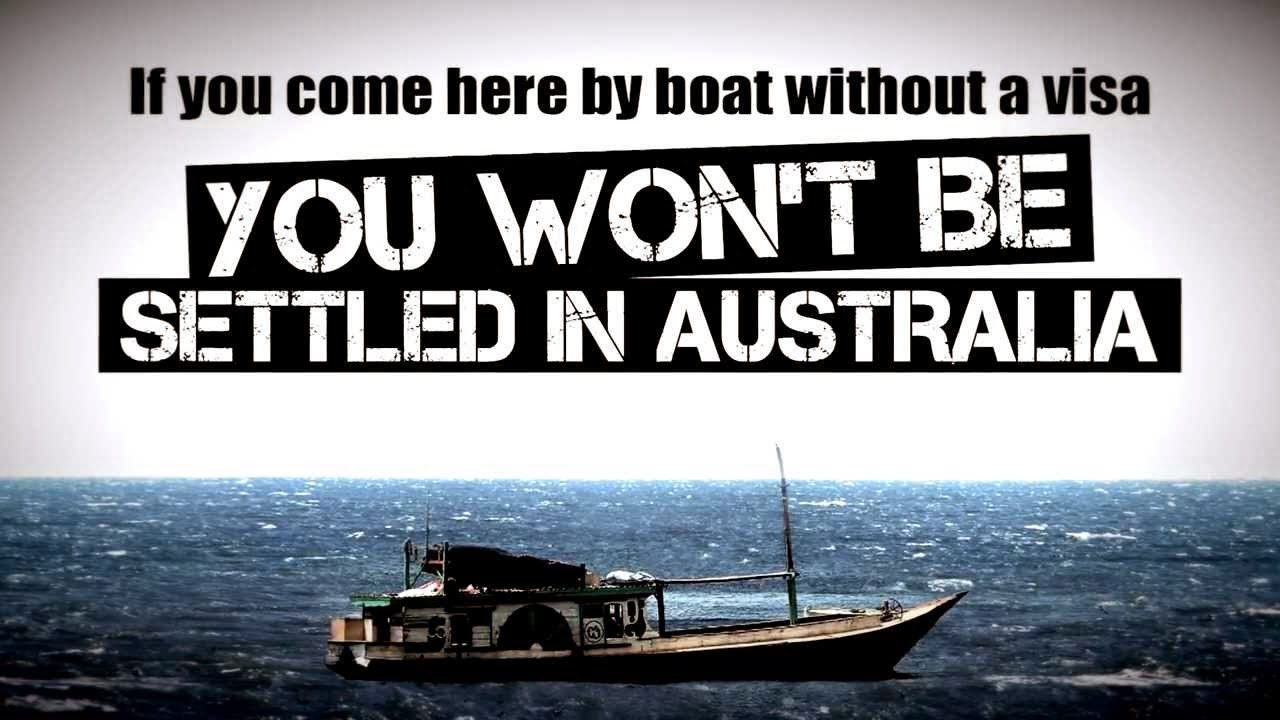
Many Australians will remember the famous words of John Howard in 2001 when he declared ‘we will decide who comes to this country and the circumstances in which they come.’[1] Thus began, or at least brought to the surface, a nation’s fear of so-called ‘illegals’, ‘queue-jumpers’, ‘aliens’, or the all-inclusive term ‘boat people’. In August of that same year, a small fishing boat called ‘Palapa I’ was discovered by MV Tampa as it carried 433 asylum seekers who were ‘mostly Hazaras escaping the Taliban.’ MV Tampa, the Norwegian fishing vessel proceeded to take the asylum seekers to Christmas Island, However, the SAS forcefully gained control of the vessel. On September 11, 2001, the Federal court ruled that ‘the government was obliged to bring the asylum seekers ashore and assess their claims.[2] Later, that decision was reversed and the refugees recued by MV Tampa were taken to Nauru. The ‘Tampa affair’ presented Howard with the perfect opportunity to reassure Australians that the government was in control of the nation’s borders.[3]

The offshore processing of the refugees discovered by MV Tampa in the Indian Ocean marked the beginnings of the ‘Pacific Solution’, which would a decade later be reinvented by the Gillard-Labour government in response to political turmoil over an apparent ‘influx’ of ‘boat people’. This costly endeavour of sending those who ask for our help to offshore detention centres has been praised for its effectiveness, or more precisely, its ability to ‘stop the boats’. The slogan ‘stop the boats’ has been embraced by both major Australian political parties.[4] Digging beneath the surface of such a slogan reveals the troubling normative issues in deterring asylum seekers through what is effectively indefinite imprisonment (or more diplomatically, detention). The costs associated with offshore processing are not just financial but also moral, psychological, and spiritual. I believe the Christian metaphysical underpinning that can operate from a non-consequentialist basis has something unique to offer the ethical discourse on this matter.

A biblical narrative

The narrative of the biblical texts are crucial for developing a holistic understanding of what a biblical response to this seemingly complex issue could look like. Rev. Dr. Gordon Preece emphasises that ‘we are all boat people,’ and that like us, ‘the Israelites needed repeated reminding that they were originally refugees.’[5] William Cavanaugh goes further in suggesting that the church itself is ‘already constituted by refugees,’ not merely originally, but is continually a body of refugees.[6]

The Old testament provides countless images of refugee stories. The Hebrew word ‘ger’ appears 92 times in the text. The word is translated to mean ‘stranger’ (Gen15:13, 23:4), ‘sojourner’ (Exod 2:22, 1 Chron 29:15), ‘alien’ (Exod 12:19, 2 Chron 2:17), or ‘foreigner’ (1 Chron 22:2).[7] Nearly all appearances of this word are accompanied by normative commands. Examples of these normative commands can be found when God orders no preferential treatment for the native-born over the alien (Lev 24:16, Num 9:14), when God orders the Israelites to love the foreigners (Deut 10:19), and when God commands the Israelites to leave enough food ‘for the foreigners, orphans, and widows (Deut 24:20).[8] Rather than top down charity which reinforces existing power relations, there is a strong emphasis on empathetic solidarity in the biblical text.[9]

Furthermore, Jesus is presented as a refugee who is fleeing a despotic dictator who gave orders ‘to kill all the boys in Bethlehem and its vicinity who were two years old and under.’[10] As a refugee King, Jesus recapitulated the normative themes explored in relation to refugees in the Old Testament texts. In Matthew 25, for example, Jesus tells his followers that we must view actions which are to the benefit of the least advantaged members of society as our duties as people who claim to love God.[11] It is in this crucial passage where Jesus explicitly states that there is no difference between an act of commission and an act of omission. Not doing something good, in Jesus’ ethical framework, is doing something bad. In other words, ignorance is not bliss.

Christians are far from united on the specific issue of ‘boat people’, perhaps even more so than other modern political and ethical issues that the churches are tackling. Tony Abbott, the leader of the federal Liberal party, when responding to a question about ‘why his attitude to asylum seekers was unchristian’ responded by suggesting: ‘I don’t think it’s a very Christian thing to come in by the back door rather than the front door.’[12] But as Preece points out, there have been plenty of Christian Refugees at Maribynong, Woomera, and Curtin detention centres.[13] Others, such as the Anglican Archbishop of Sydney, Peter Jensen, have endorsed the Houston and Aristotle reports, effectively supporting the reintroduction of the ‘Pacific Solution’ even though Jensen opposed offshore processing a decade earlier, arguing that ‘illegal’ actions of asylum seekers were caused by necessity.[14]

Normative issues

The consequences of a policy of deterrence can be severe and the policy can cost lives. On the other hand, the consequences of having no deterrence mechanism in place could also cost lives. In a normative sense, all I have suggested thus far is that we should be nice to refugees, which I presume is fairly uncontroversial. The next section seeks to establish which moral theory is most compatible with a biblical response to this issue.
The justifications given in support of coercive deterrence mechanisms in regards to those seeking asylum are largely utilitarian. The utilitarian perspective suggests that the means can be compromised in order to achieve the desired ends. This means that a utilitarian would find it acceptable to strive towards an ideal through non-ideal means. This is the first and most obvious clash between Christianity and utilitarianism. If Jesus wanted us to ‘love our neighbours’ or ‘love our enemies’ only when it was effective, then the command itself is ruled invalid by a greater command of ‘do what is most effective’. Martin Luther King, Jr. noticed this contradiction between Christian thought and utilitarianism, contending, ‘ultimately you can’t reach good ends through evil means, because the means represent the seed and the end represents the tree.’[15] Elsewhere he suggests that ‘the means represent the ideal in making and the end in process ... So as you seek justice as an end, you use just methods to get there.’[16] Paul writes in Romans that the people who think the Christians are teaching ‘let’s do evil so that good will come from it’ will be justly condemned.[17] Sending asylum seekers to detention centres in third world countries is the most explicit example of doing evil, in the hope that good will eventuate.

The second problem associated with the utilitarian justification for sending asylum seekers to places like Nauru is that it treats the individual asylum seekers who are sent to Nauru as mere means rather than ends in themselves.[18] This is a separate problem from the first issue raised which is specifically about the inconsistency of the means. The second problem differentiates the common asylum seeker from the common criminal. The common criminal has her liberty denied firstly for her own sake (rehabilitation, inability to reoffend), and the secondly, as a means to deter other people from committing that same crime.[19] For example, I would agree to live in a society where if I murdered someone I would then be incarcerated. Even if I am not rational at the time I murder someone, I can say now that it would be in my best interests to be separated from society for a time and to receive compulsory counselling and behavioural training so that I can be rehabilitated. Whereas, the common asylum seeker differs from the common criminal in that the asylum seeker has committed no moral or legal wrong, does not need rehabilitation, and imprisonment, (particularly in places like Nauru) and imprisonment is not in the asylum seekers’ interests. Imprisoning people who have committed no crime in order to deter other people from asking for our help treats the imprisoned people as a means rather than an end and strips them of their personhood and equality under God.

It is important to remark, that even if the utilitarian framework is accepted, one still needs to consider whether the empirical data shows that coercive deterrence leads to the maximisation of welfare. In a similar way, a utilitarian would only support torture in circumstances where welfare is maximised (eg., torturing one person to save the lives of two others). Authors such as Andy Lamey point out that Australia’s deterrence system causes asylum seekers to suffer from high stress levels and an increased risk of committing suicide.[20] He also points out that it gives them a status lower than criminals which is detrimental to their identity.[21] This shows that even from a utilitarian perspective (which does not generally synthesise with biblical teaching) it is difficult to justify ‘stopping the boats’.

A common objection to applying biblical principles to national security policies is the radical and demanding outcomes they infer. Unfortunately Christian thinkers such as Preece and Ralston have done very little to address the objection which asks: ‘at what point ought we turn people away?’ Preece inaccurately suggests that ‘even the most bleeding hearted, naive liberal is not saying ‘let everyone in’.’[22] Perhaps most liberals are not arguing this approach, but some of them are, and they should be considered. Still, it is unclear as to when Preece thinks we should begin to refuse asylum seekers protection and what means we should use to keep uninvited asylum seekers out of Australia. Ralston suggests that it is not necessary for the church to ‘advocate for a complete open-door policy to refugees,’ pointing out that the break-even point may arise if resettling refugees has a negative outcome for the ‘existing marginalised populations.’[23]

One suggestion would be that our obligations begin at the point where we have to sacrifice something significant, but they should not exceed the point where our self-care diminishes. In regards to where our obligations begin, we should take seriously Carens’s claim that ‘we have an obligation to open our borders more fully than we do now,’ and especially more fully to those who are in need.[24] Carens suggests that ‘open immigration would change the character of the community, but it would not leave the community without character.’[25] We must avoid holding on to our ideals of a static hegemonic culture when displaced people require our assistance. In regards to the upper constraints of our obligations, we should not require of ourselves more than God has called us to. God has called all believers to love their neighbour as themselves, which requires a basic level of self-love and self-care as a means to fulfil his work on earth.

Conclusion

In terms of acting upon our obligations as Christians to care for the refugee, I will briefly note one model which Ralston believes is compatible with a Christian understanding of justice. Ralston suggests that one of the most effective ways of communicating God’s ‘love and presence’ is through living with refugees, as exemplified by the Jesuit Refugee Service (JRS). He believes that the church is lacking in genuine encounters with refugees, and I am not inclined to disagree with him. This same model is being replicated through the ‘First Home Project’ in Perth, Australia. The Christian call is, however, not limited to one particular model (which some may find too demanding in their current context). Political activism and financial donations, or offerings of skills training and language development are all ways that Christians can live out the community and compassion they have been called to.

In conclusion, the Christian narrative and principles of justice encourage Christians to treat asylum seekers as humans who hold inalienable rights. This essay has shown the incompatibility of utilitarianism and the Christian ethical framework. First, coercive deterrence mechanisms severely compromise the commands which have been given to us in regards to how we ought to treat our neighbours. Second, people should not be treated as mere means due to their mode of transport and their legal status. Therefore, the Christian cannot endorse a policy which seeks to coercively use one lot of people purely as a means to deter others from asking for our assistance.

Works Cited

ABC. “Seek and Ye Shall Submit (Transcript).” Q&A, September 10, 2012. http://www.abc.net.au/tv/qanda/txt/s3581623.htm.
Biblos.com. “Online Parallel Bible”, 2011. http://bible.cc/.
Burnside, Julian. “Australians Don’t Fully Understand What Is Being Done in Their Name.” The Age, August 26, 2011. http://www.theage.com.au/opinion/politics/australians-dont-fully-understand-what-is-being-done-in-their-name-20110825-1jcbn.html#ixzz28TZW5Dm7.
Carens, Joseph H. “Aliens and Citizens: The Case for Open Borders.” The Review of Politics 49, no. 2 (April 1, 1987): 251–273.
Cavanaugh, William T. “Migrant, Tourist, Pilgrim, Monk: Mobility and Identity in a Global Age.” Theological Studies 69, no. 2 (June 2008): 340–356.
Clarke, Sarah. “Liberals Accused of Trying to Rewrite History.” Lateline. ABC, November 21, 2001. http://www.abc.net.au/lateline/content/2001/s422692.htm.
Jensen, Peter. “Interview with Amy Butler on Australia’s Treatment of Asylum Seekers and Refugees”, 2001. http://sydneyanglicans.net/seniorclergy/archbishop_jensen/48a.
Kant, Immanuel. “The Categorical Imperative.” In Ethics, edited by Peter Singer, 274–279. Oxford University Press, USA, 1994.
King, Martin Luther. “A Christmas Sermon on Peace” (n.d.).
———. Methodist Student Leadership Conference Address. September 10, 2011. American Rhetoric, 1964.
Lamey, Andy. Frontier justice : the global refugee crisis and what to do about it. Canada: Doubleday Canada, 2011.
Maccullum, Mungo. “‘Stop the Boats’ Has Become Bipartisan Policy.” ABC, July 2, 2012. http://www.abc.net.au/unleashed/4105116.html.
Mares, Peter. Borderline : Australia’s Treatment of Refugees and Asylum Seekers. Sydney, Australia: UNSW Press, 2001.
Preece, Gordon. “We Are All Boat People: An Exposition of a Biblical View.” In Refugees : justice or compassion?, edited by Hilary D Regan, Andrew Hamilton, Mark Raper, and Australian Theological Forum. Hindmarsh, S. Aust.: Australian Theological Forum, 2002.
Ralston, Joshua. “Toward a political theology of refugee resettlement.” Theological Studies 73, no. 2 (June 2012): 363+.
“Report of the Expert Panel on Asylum Seekers”, n.d. http://expertpanelonasylumseekers.dpmc.gov.au/report.
The Australian. “Abbott Slams Boatpeople as un-Christian”, n.d. http://www.theaustralian.com.au/national-affairs/immigration/abbott-slams-boatpeople-as-un-christian/story-fn9hm1gu-1226422034305.


[1] Clarke, “Liberals Accused of Trying to Rewrite History.”
[2] Burnside, “Australians Don’t Fully Understand What Is Being Done in Their Name.”
[3] Mares, Borderline : Australia’s Treatment of Refugees and Asylum Seekers.
[4] Maccullum, “‘Stop the Boats’ Has Become Bipartisan Policy.”
[5] Preece, Gordon, “We Are All Boat People: An Exposition of a Biblical View,” 73. I must thank Gordon for the time he has spent with me discussing these issues.
[6] Ralston, “Toward a political theology of refugee resettlement,” 373.
[7] Strong’s Hebrew: 1616 in Biblos.com, “Online Parallel Bible”, see: http://concordances.org/hebrew/strongs_1616.htm.
[8] Strong’s Hebrew: 1616 in ibid., see: http://concordances.org/hebrew/strongs_1616.htm.
[9] Cavanaugh, “Migrant, Tourist, Pilgrim, Monk,” 352.
[10] Biblos.com, “Online Parallel Bible”, Matt 2:16.
[11] Ibid., Matt 25.
[12] The Australian, “Abbott Slams Boatpeople as un-Christian.”
[13] Preece, Gordon, “We Are All Boat People: An Exposition of a Biblical View,” 82.
[14] Jensen, “Interview with Amy Butler on Australia’s Treatment of Asylum Seekers and Refugees”; ABC, “Seek and Ye Shall Submit (Transcript)”; “Report of the Expert Panel on Asylum Seekers.”
[15] King, “A Christmas Sermon on Peace.”
[16] King, Methodist Student Leadership Conference Address.
[17] Biblos.com, “Online Parallel Bible”, Romans 3:8 and 6:1.
[18] Kant, “The Categorical Imperative,” 279. Kant suggest that “every rational being exists as an end in himself and not merely as a means to be arbitrarily used by this or that will.”
[19] At least, this is how one would expect the legal system to function.
[20] Lamey, Frontier justice, 118.
[21] Ibid., 129.
[22] Preece, Gordon, “We Are All Boat People: An Exposition of a Biblical View,” 70.
[23] Ralston, “Toward a political theology of refugee resettlement,” 386.
[24] Carens, “Aliens and Citizens,” 270.
[25] Ibid., 271.