Saturday, January 18, 2014

Confessions of an (almost) pacifist


Polarisation

It's the name of the game. People tend to like to pigeon-hole others, and by implication - themselves, as far away from those with opposing views as possible. It forces each one of us into thinking in black and white. Shades are a compromise.

But even those who believe that shades hold truth, often believe it with the same force as those who hold fast to a black and white mindset. Any views, whether open on closed, progressive or conservative, left or right, which need to pigeon-hole others as a counterpoint for validation purposes are essentially black and white.

And yet black and white is incredibly attractive to us humans. We believe we have each eaten the fruit from the tree of the knowledge of good and evil which convinces us that we are righteous judges. Perhaps more so, it convinces us that we are right judges. We have each been to the mountaintop and are so confident in our beliefs that we would commit murder to see them practised among the others.

Confessions of an (almost) pacifist

They came to the village with their weapons. Home by home, they raided. Life by life they ended. In order to do no harm, the villagers stood by watching their wives and children being raped and tortured.

I have a certain admiration for those in our military and police force. To the extent that they are willing to, or in many cases have already taken the courageous step of sacrificing their lives for others, they are the most noble among men. I often doubt whether I or many others would be willing to make the sacrifice they make - at times for their mates, at other times during humanitarian missions. To blindly criticise the army and police-force and what they have committed their lives to without any thought for their vision, hope, and aspiration reflects either blatant hypocrisy or one's own inflated ego.

Could I, as an advocate for demilitarisation and non-violent responses to conflict condemn those that are willing to risk their own lives to save the villagers in the italicised example above? I would suggest that I would have no right to condemn such people for their actions. I have not been in a war zone, I do not know what it is like to stand by while those I love are either being tortured, raped, or killed. What gives me the right to condemn those who are willing to risk their life and liberty for their families? Sometimes I want to blindly condemn such people - because deep down I still want the world to be black, white, and nothing else.

A third way

I believe that it is not inconsistent to admire those who sacrifice themselves for others and yet believe that there may be a third way that involves neither passivity or aggression as tools for overcoming evil.

Love inevitably overcomes evil. I believe that our nature is good and that goodness comes more naturally to us than evil. I believe that no individual created by a loving God is irredeemable. I believe that God still has good work planned for warlords and juntas; presidents and paedophiles. These fundamental ideas give me no other option than to believe that killing even the most evil of men is denying them the option of doing the good and loving works that God (still) has planned for them.

We could argue 'till the cows come home as to whether humans are in fact naturally good and whether all humans are created to respond and be transformed by simple acts of love. We will never get there in a debate. This is where I have to admit that my belief in non-violence which leads me to being an (almost) pacifist is not fundamentally based on rationality but my understanding of human nature, creation, and God.

And while some argue (rather convincingly in my opinion) that non-violence is the most effective means of overcoming evil in real world conflicts, I admit that I am not basing my beliefs on this empirical evidence. I believe that love wins. This is the hope that keeps me alive. 

Perhaps I am wrong

How will I answer if I have got this all wrong. Perhaps I have let innocent people die because of a faith-based axiom which perhaps could be, but is not in my mind, based upon strict and impartial logic. I believe this is a real possibility. If I am deluded and wrong, I can only ask for forgiveness.

None of us should believe that we are beyond reproach. Whatever the answers may be, a good starting place is to desire the good of others no matter who they may are. In seeking the good of others, friend or foe, we move towards an idea of 'good' for the commons and away from relentless polarisation and shouting matches.

Nevertheless

If good does win at the end of the day, and if even the most wretched of us can be transformed through love, then there will never be enough time to practice this understanding and share it with the world. If the same God created Muslim and Jew, Christian and Atheist, then we must invest ourselves into building bridges rather than walls. If God is in fact good, and desires good for us, we have no enemy to kill and no need to be validated through polarising others.


Saturday, November 16, 2013

Let's face it: We're probably racist.


Let’s face it. 

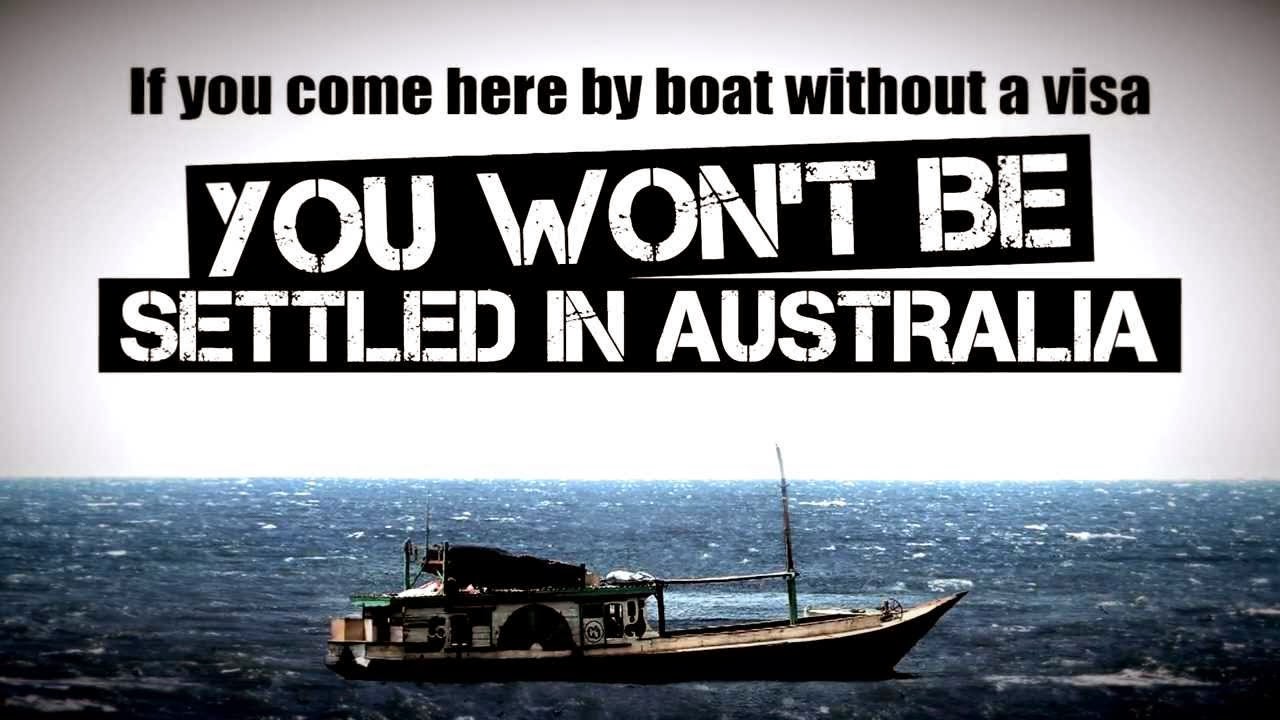
If New Zealand was under attack and boatloads of predominately white people from New Zealand came to Australia, our ‘stop the boats’ policy would change instantly. They wouldn't be sent to Nauru, Manus Island, or anywhere else with the promise of never being resettled. They wouldn't be perceived as a threat; as selfish individuals who have come to our country as economic opportunists. We wouldn't seek to deter ifrom asking for our help.

They would be welcomed.

If they were ten, twenty, or thirty percent of our net migration in a given year, we would not flinch. We would welcome support from governments, churches, and charities whether it be in solidarity or in substance. Our preachers would not preach hate. Our teachers would teach us to hear their stories. 

Our lives would be mutually enriched.

If they came to our country we would give them the right to work. We would allow them to have a dignified existence in our midst, and seek to know them in a deeper way than as ‘the other’. Ungracious metaphors would have no place in our language. They are not a flood, a drain, or a wave. They are people. They are real people. They have names. They have stories. They have suffered.

They would be heard. 

If they came to our country they would not see signs saying ‘go away, we’re full’, or ‘don’t like it? get out’. They would be encouraged to express their culture, to teach their histories, to share their food. They would not be looked upon suspiciously. There would be no neighbourhood alarm to ring when one of them steps foot on to a particular piece of land.

We would choose to embrace them.

Why would our reaction be different if they were from a predominantly white country? 

Because we are racist.

People who believe the spin that says ‘they’ have malintent and are out to get us are racist. People who think that asylum seekers fleeing persecution are somehow gaming the system are racist. People who think that suffering and vulnerable people who need our help should be shown the door are racist.

Let’s not use colourful ‘diplomatic’ language and call them ‘rationalists’, ‘conservatives’, or ‘patriots’. It’s time we called a spade a spade, a person a person, and a racist a racist.

Sunday, September 22, 2013

Not so Super

One of the joys of attempting to navigate towards the Kingdom in the unKingdom/non-Kingdom kingdom of our world is working out the least worse decision when there is no clear singular moral option. I think this is the case for superannuation. Money can be a very bad thing - we know what it does to us yet we still submit to it. However, I think superannuation is nearly unavoidable. So if you have super or are considering investing in a super fund then keep reading.

There are a plethora of ethical and topical considerations which cannot be ignored when it comes to where we invest our money. This is why I recently emailed REST who I currently invest with to find out more about their ethics. This was my email:

'I am a member of Rest Industry Super. I am hoping that you can clarify the following points for me as to my investment with Rest.

  1. Does Rest invest in companies who manufacture weapons?
  2. How does Rest ensure that my investments cause no harm to the environment?
  3. Does Rest adhere to a transparency code?
  4. Does Rest adhere to a charter of ethics?
  5. Does Rest invest in gambling, alcohol, tobacco, or any other industries that are commonly considered to be unethical?'
I sometimes agitate by asking too many questions, but I didn't really consider the above questions unreasonable. This was the response I received:
'Sustainability is one of many important investment considerations our investment managers seek to take into account. We don’t classify underlying investments we hold as you require and we do not restrict investment on any singular consideration. We invest in a range of assets such as shares, bonds, property and infrastructure.'
I found the above response completely inadequate from a customer service perspective and from an ethical perspective. To not restrict investments according to particular 'singular' considerations means that anything is up for grabs... weapons, gambling, porn - you name it!

Australian Superannuation had been suggested to me as the default option for people working in the NGO (NFP) sector. Unfortunately they have removed their restrictions on unethical investments in 2010.

I also had a look at Crescent Wealth, Australian Ethical Super, Cruelty Free Super, and Christian Super. My criteria was that my fund of choice must have a clear stance on various ethical issues, most importantly, weapons manufacturing. They also must have a good standing with SuperRatings.

The list is as follows, from good to bad:
  1. Christian Super - for it's clearly defined stance on topical issues and great ratings
  2. Australian Ethical Super - for it's somewhat defined stance on topical issues and good ratings
  3. Crescent Wealth - for it's clearly defined stance on topical issues, good treatment of animals (generally), clear stance on weapons
  4. Australian Super - Good ratings/awards
  5. REST - ....?
To clarify - Christian super is not first because I identify with the term Christian. That would be like taking a how-to-vote card from the Christian Democrats. Christian Super seem to have the clearest stance on the issues which I feel strongly about (not sure what they are? read the rest of my blog!).

Thoughts?

Monday, March 11, 2013

The Kingdom of God


Christ compels us to see God's image in the people whom our society tells us are evil. Moreover, by his example we are called to reject the systems, hierarchies, and religion which depend upon the diminished worth of some to feed the privileges (and stomachs) of others. When we begin to see God's image in all of God's children there ceases to be room for the kinds of exclusionary practices which have haunted our world. 

In the new kingdom, false gods such as racism, militarism, poverty, sexism, homophobia, and others are not required for the Glory of the King. They often are required for the maintenance of our current systems, hierarchies, and religion. Our Kings and Queens, Prime Ministers and Presidents, CEOs and CFOs can only exist in their positions because we believe that some people are capable of determining what is good and right for others, while another, often much larger group of people are incapable of looking after their own affairs. 

We can only acknowledge one lawmaker, and therefore, we can only acknowledge one set of laws. If His law and other 'laws', practices, and beliefs are not in harmony with one another, we are presented with the perfect opportunity to be one with whom our obedience must lie.

I have been born into a world of golden idols whom our Pharisees lead us to worship. For how long will we follow their laws as a derivative of our patriotism, their economic injustices masked by our reliance upon capitalism, and their prejudices based on our worship of false Gods? 

Repent, for the Kingdom of God is at hand.

Tuesday, January 1, 2013

Sabbatical Sundays


This is an idea that I've been thinking about for a few months now. I thought I would write something up about it before I start a public Facebook page for discussion and accountability purposes. Let me know what you think!

Work, Buy, Consume, Die


Sabbatical Sundays

Imagine it’s nine in the morning on Boxing Day. The consumer capitals of our major cities are preparing for the rush of shoppers seeking a bargain. Blurry-eyed retail staff, still recovering from the lead-up to Christmas awaken early. Some of them cancelled plans to attend Christmas dinner with their families the night before knowing that the security of their employment depended upon their availability during the ‘Christmas black-out period’.

But this year, when the shops open from eight in the morning, something is different. You’re nowhere to be found. Not just you, but several of your friends who once flocked to the sales and battled for car parks have made a conscious decision. This year you decide to put yourself in the shoes of the retail staff. You decide that time spent with family and friends is more sacred than your shopping. This year, your shopping can wait.

Sabbatical Sundays is the meeting place for a movement of people who are concerned about how 24/7 trade effects things more important than consumables. This is a movement of people who understand that the conditions of employment for many workers in service-related industries are not what they would choose if they had greater influence over their terms of employment. These are not the conditions we would choose if we were employed in service-related industries.

There are several reasons why one may want to consider the effects of demanding 24/7 labour. It might be because you are concerned with the effects that this kind of trade has on the people working in the industry. It might be because you are concerned with the ever-increasing power of multi-national corporations and how 24/7 trade makes it more difficult for small-scale businesses to break into the market. It may be because you believe that time spent with family is more important than corporate profits. It might be because you believe that 24/7 trade is incompatible with your religious or family values. There are many reasons why you may want to consider what labour you demand and when you demand it – this is a place where people with different drivers can come together under the same idea.

While a sabbath or sabbatical, considered to be a time of rest or worship, could be observed for any stretch of time on any given day, month, or year, this idea specifically related to Sunday labour. If there is one day of the week that could be won back, one day of the week that some consider holy, or one day of the week that families and communities gather together to appreciate what is really important about our existence, that day is Sunday.

This movement, however, also believes that 24 hour trade is not a necessity and that to drop into a fast-food joint at two in the morning demands a kind of labour that no one should be asked to provide. This kind of out-of-hours luxury labour is drastically different to requiring emergency services. It is inevitable that people working in the emergency services sector will be required to work unusual hours. The same cannot be said for fast-food and retail outlets. For their services, we can wait until morning.  

From these thoughts has sprung the idea and movement that has long existed yet feels buried: Sabbatical Sundays.

Tuesday, November 6, 2012

Video: BAE Systems Australia: at the forefront of war

My last post regarding the work of BAE Systems Inc. and BAE Systems Australia has attracted an enormous amount of views, making it my second most viewed post ever. It's great to know that people are paying attention to the militarisation of our world.

Check out this video made by some peace activists in Melbourne to get a better idea of what we are trying to communicate to BAE Systems Australia. Let them know what you think here.


Wednesday, October 24, 2012

BAE Systems: Censoring the voices of the people

The site of the latest BAE Systems protest - with many more to come


Why is it that a company like BAE Systems would not want a couple of Gandhi & Martin Luther King, Jr. quotes pasted around their Facebook page?

Why is it that a company like BAE Systems would censor any views which they disagree with, no matter how politely they are put? 

Why is it that a company like BAE Systems who claims to be fighting the 'war on terror' would, in the most undemocratic fashion, silence the voices of the people?

Maybe it's because BAE Systems are one of the largest, if not the largest arms producer in the world. They sell weapons to over 100 countries including Israel. They are a threat to national security. They are a threat to human security. They are a waste of, what essentially is tax payer's money.

You don't need to do much research to find out about the instances of bribery and corruption within their ranks. BAE Systems have been caught breaching arms control regulations which aim to prevent weapons falling into the wrong hands.

Don't let BAE Systems fool you. They are not a civilian transport organisation. They are primarily involved in the arms trade. 

They're not on a particular side of global conflicts. They are on every side of global conflicts. 

They are in it for the money. If the wars stop, their profits go down. It's in their interest for people to keep blowing each other up.

I plan on posting more about BAE Systems. Fortunately here they cannot censor what I say, although I'm sure they will try. I hope to have a video from a recent protest outside their offices in Melbourne posted shortly.

Maybe it is time for us to stand up against this organisation. Post your city below - there is probably a BAE Systems office near you. Organise a protest, a blockade, a letter handout. Do something. Change the world.